
Mongolia Adopts Major Investment Law Reforms
On 2 July 2026, the Parliament of Mongolia approved the Economic Freedom Law together with a package of related legislative amendments. The reforms include long-awaited amendments to the Investment Law, the Law on Permits, and several accompanying laws that collectively represent one of the most significant overhauls of Mongolia's investment and business environment in recent years.

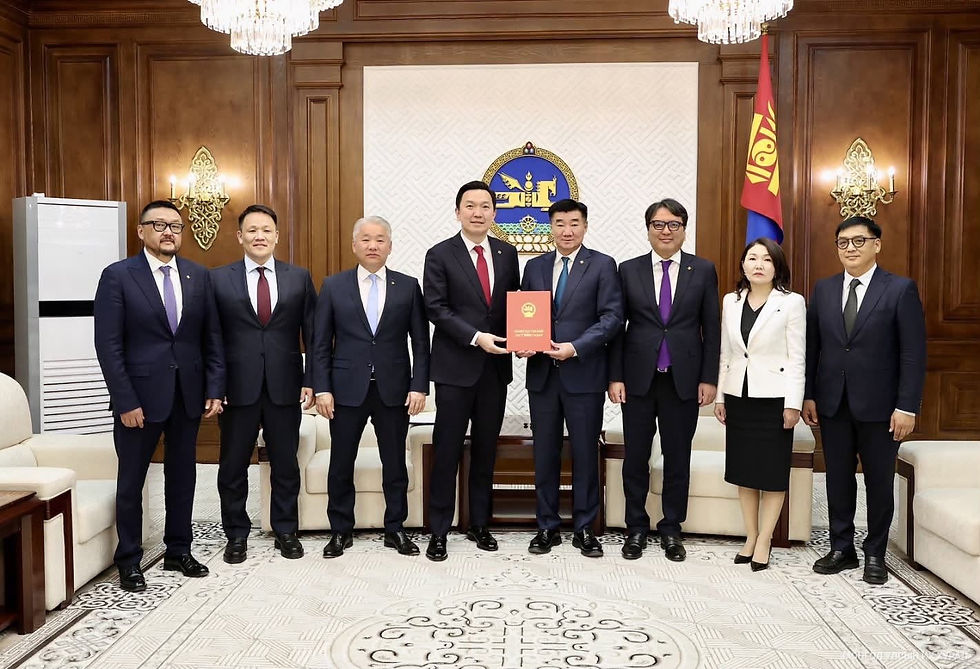
The key reforms introduced under the amended Investment Law and related legislation include:
1. Enhanced Tax Incentives for Investors
The amendments strengthen investment incentives and activate several provisions of the Investment Law that had remained largely unimplemented for years.
The withholding tax on interest income earned from loans and debt instruments raised by Mongolian financial institutions from domestic and international sources has been reduced from 20% to 5%.
Import customs duties will be fully exempted for:
Information technology equipment used in data centers and artificial intelligence facilities; and
Machinery and equipment imported during the construction phase of qualified investment projects under Article 11.2 of the Investment Law.
Foreign banks establishing branches in Mongolia will no longer be subject to the previous 20% shareholding limitation.
Tax incentives on income generated from the issuance and trading of bonds, shares, and other securities in Mongolia's primary and secondary capital markets have been extended.
2. Stronger Investor Protection and Dispute Resolution
The new framework establishes a formal investor grievance mechanism and reinforces access to international arbitration.
If an investment dispute cannot be resolved through negotiation or mediation within six months, the parties may submit the dispute to mutually agreed international or domestic arbitration.
The Investment and Trade Agency will receive investor complaints, submit recommendations to relevant government authorities, and monitor the implementation of those recommendations.
3. Removal of Selected Foreign Investment Restrictions
Several sectors previously subject to investment restrictions have been opened to foreign investors, including:
Banking
Environmental impact assessment services
Intellectual property services
Agricultural commodity and raw material exchanges
Renewable energy
Data centers
Artificial intelligence and other emerging technology sectors
4. Stronger Investment Guarantees Aligned with International Standards
The amendments introduce internationally recognized investment protection principles.
Government authorities are prohibited from unlawfully suspending, restricting, or interfering with an investor's operations.
Any government decision affecting investment activities or investors' legal rights must be publicly disclosed in advance, subject to stakeholder consultation, and officially published.
Investments are protected against unlawful expropriation.
5. Simplified Investment Stabilization Certificates
The eligibility requirements for stabilization certificates have been simplified, while their validity period has been extended.
Depending on the size and location of the investment, investors may receive stabilization certificates valid for 10 to 20 years.
6. Improved Institutional Framework and Reduced Regulatory Burden
The reforms clarify the responsibilities of government agencies and reduce overlapping regulatory inspections.
The Investment and Trade Agency will be responsible for attracting, retaining, supporting, and promoting foreign investment, providing investor information, operating a digital one-stop service, collecting and publishing investment statistics, and administering investor complaints.
Businesses will not be subject to more than two overlapping inspections by government authorities.


Comments